Word Mosaic
Fugo GamesWord
4.896.00 Reviews
- Version
- 1.7.1
- Installs
- 100.00K
- Age Rating
- Everyone
Screenshots
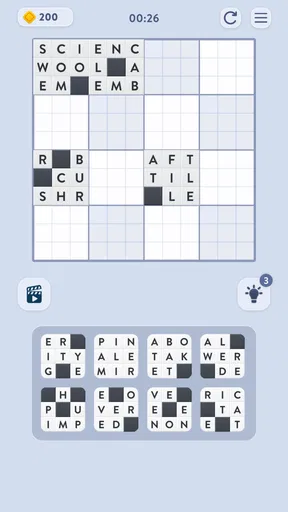
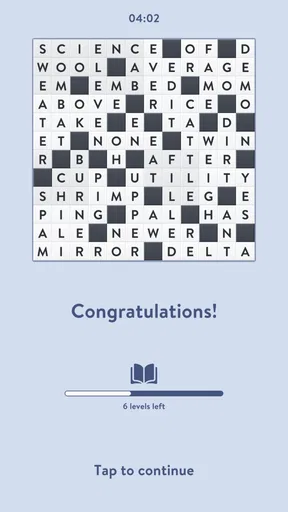
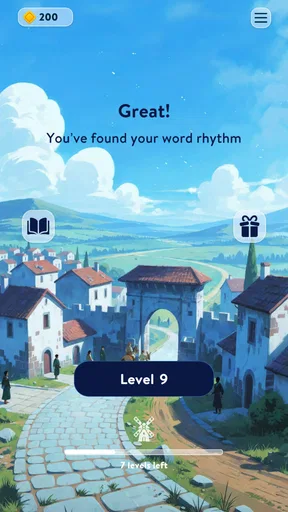
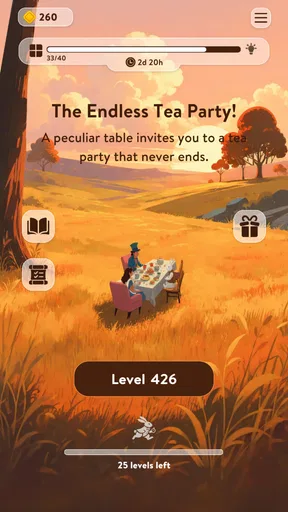
Our Review of Word Mosaic
 Analysis by Appyee
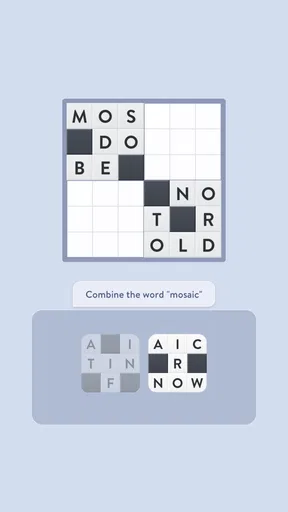
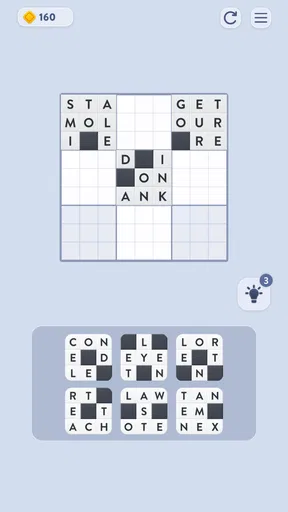
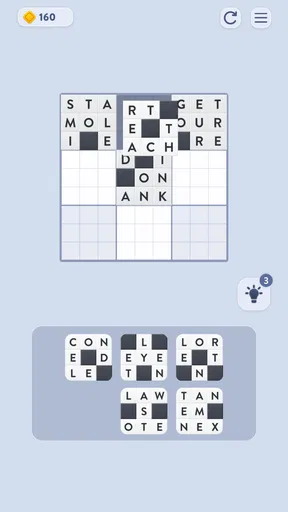
I found Word Mosaic appealing because it turns word play into a visual placement challenge rather than another race to type answers quickly. The basic idea is easy to understand: I place letter tiles into the right squares until the puzzle forms a complete mosaic. That simple structure gives it a calmer personality than many word games, while still making every move feel deliberate.
My overall view is that this is best enjoyed as a short, focused puzzle game. It is not the right pick if you want a deep vocabulary course, a competitive word arena, or a story-driven adventure. However, if you like arranging letters, spotting patterns, and solving problems at your own pace, it has a clear reason to stay installed.
Why the tile-and-mosaic format works
The strongest part of the experience is the way the visual board supports the word puzzle. Instead of staring at a plain list of clues, I am constantly checking how individual tiles fit into a larger arrangement. That makes the act of solving feel more physical and spatial. A correct letter is not only an answer; it is also a piece that helps complete the image-like layout.
This distinction matters when I am tired of familiar word-game routines. Traditional crossword-style games usually make clues the center of attention, while anagram games focus on producing as many words as possible from a set of letters. Here, the placement itself becomes part of the reasoning. I have to think about what a tile could represent and where it belongs, so the puzzle has a satisfying second layer.
The concept is particularly suitable for short sessions. I can open it while waiting for an appointment, play during a quiet coffee break, or solve a few boards before bed without needing to remember a complicated control system. The format also makes it approachable for someone who does not normally play games, because the central action is immediately readable.
Fugo Games is the developer behind the title, and the game is listed as free to play. That makes trying it straightforward, although the presence of optional purchases means the free experience should be approached with realistic expectations. Items range from $1.99 to $19.99 each, so anyone who prefers games with no spending prompts should pay attention to how the progression feels over time.
The visual logic changes how I solve
One of the more interesting habits this game encourages is switching between two ways of thinking. At first, I may approach a board as a word problem, looking for familiar letter combinations. When that stalls, I can reverse the process and study the open spaces, using the shape of the remaining arrangement to narrow down possible placements.
That back-and-forth is more useful than simply guessing. For example, if several tiles seem plausible in isolation, their position on the board can help eliminate choices that would leave an awkward gap elsewhere. I found this especially helpful on puzzles where the vocabulary was not immediately obvious. The layout gives me another source of information instead of forcing me to rely only on memory.
A practical tip is to avoid filling the first square that seems possible. I get better results by scanning the whole board, identifying tiles that have only one sensible destination, and placing those first. These fixed points make the uncertain areas easier to read. It is a small change in approach, but it reduces the number of unnecessary reversals and makes the solving process feel more controlled.
Another useful habit is to treat an almost-complete section as evidence, not merely as a finishing target. If one area is missing a particular kind of tile, that can reveal the intended relationship between nearby letters. This is where the mosaic presentation earns its place: the board is not just decoration around a word puzzle; it can actively guide the deduction.
Good for quiet concentration, not frantic competition
I would recommend this game to people who enjoy a measured pace. It gives me room to inspect the board and reconsider a choice, which is a welcome alternative to word games built around timers, leaderboards, or rapid-fire rounds. The calm format also makes it suitable for casual players who want mental activity without the pressure of performing quickly.
That same quality may disappoint players who need constant excitement. If your ideal word game involves racing an opponent, building long streaks under a clock, or discovering a large collection of modes, this may feel restrained. The core pleasure comes from solving one arrangement at a time, so its appeal depends heavily on whether that kind of repetition feels relaxing or too narrow.
The game can also work well as a shared activity, even though the solving itself is individual. I can imagine handing the phone to a family member when a particular board becomes difficult, or discussing whether a tile belongs in one of two spaces. Because the rules are visually clear, another person can understand the problem quickly without needing a tutorial or a long explanation.
What I would watch before committing to it
The main limitation is the narrowness of the central loop. The tile-placement idea is distinctive, but it is still one idea. If I play for a long stretch, the satisfaction depends on whether the changing arrangements continue to feel fresh. Players who need frequent mechanical variety may find the experience less compelling than a broader word-game collection.
The free-to-play structure is another point to consider. I appreciate being able to start without paying, but optional purchases can affect how comfortable the game feels for different people. A player who is happy to enjoy a free title at its natural pace may have no issue. Someone who dislikes any temptation to buy extra items should decide early on to treat the purchase options as irrelevant and avoid letting them shape the session.
I would also avoid judging the game solely by its strong average rating. It has an average rating of 4.8 from around 12 thousand ratings, which suggests that many players connect with the format. Still, a high rating cannot remove the personal question of whether visual word puzzles suit you. A game can be well liked and still feel too gentle, too repetitive, or too limited for a particular player.
The age classification is Everyone, which fits the accessible concept and makes it a reasonable option for mixed-age households. Even so, younger players may need help with unfamiliar words, while adults looking for serious vocabulary training should not assume that casual puzzle solving will replace a structured learning tool. I see it as entertainment with a language element, not as a formal study app.
Small-session strategies that make the boards easier
My first recommendation is to begin with certainty rather than curiosity. I look for the tile or space that can only work in one location, place it, and then reassess the board. This prevents a common mistake: making several speculative moves and then forgetting which assumption caused the puzzle to become confusing.
When two placements both appear possible, I leave them open and search for a different part of the mosaic. Solving an unrelated section often supplies the missing constraint. This is more efficient than repeatedly swapping the same pair of tiles. It also keeps the session calmer, because I am making progress without forcing an answer.
I find it useful to pause after a nearly complete arrangement instead of rushing the last few moves. The remaining spaces often reveal a pattern that was difficult to see earlier. In a game built around visual structure, a short reset of attention can be more valuable than repeated guessing.
For players who use word games to relax, I suggest setting a natural stopping point after a satisfying board rather than continuing until the activity becomes work. The format is well suited to brief mental breaks, and its strength is concentration without pressure. Extending every session may expose the limited core loop more quickly than playing in smaller portions.
How it compares with familiar word-game choices
Compared with crossword apps, this game appears easier to enter because the board itself communicates what I am doing. Crosswords usually depend on clues, crossing answers, and a larger body of general knowledge. Word Mosaic shifts more attention toward arrangement and recognition, so it can be a better fit for someone who enjoys word patterns but does not want to interpret long clues.
Compared with anagram games, it is less about generating a large number of possible words. The goal is not simply to discover combinations quickly; it is to place the available pieces correctly. That makes it feel more methodical and less frantic. Players who enjoy maximizing word counts may prefer an anagram title, while players who like spatial deduction may find this format more satisfying.
Compared with daily word games, it seems better suited to flexible play. I do not need to organize my routine around one particular challenge or feel that missing a day ruins a streak. The trade-off is that a daily format can provide a stronger sense of ritual and community. This game is more private and self-contained, which is either a benefit or a weakness depending on what motivates you.
It also differs from educational vocabulary apps. Those tools are usually designed around definitions, repetition, pronunciation, or measurable learning goals. Here, the words serve the puzzle first. I would choose this for relaxation and light mental exercise, not for preparing for an exam or deliberately expanding a professional vocabulary.
Who should download it, and who should skip it
I think it is a good match for casual word-game players who prefer thoughtful placement over speed. It is also suitable for people who like visual puzzles, parents looking for an accessible game to explore with older children, and anyone who wants a low-pressure activity that can fit into short breaks.
It may be especially enjoyable if you often abandon crossword games because the clues feel too demanding. The mosaic structure gives you a second route into the problem. Even when a word does not come immediately, the board can provide useful context and help you work toward the answer.
I would be more cautious if you want a large competitive ecosystem, advanced statistics, or a wide range of radically different modes. The central tile-and-mosaic loop is the reason to choose this game, but it is also the boundary of what it offers. Likewise, players who dislike free games with optional purchases should consider whether the model will bother them during longer sessions.
Device compatibility is fairly broad: the game requires Android 8.0 or later. Its current version is 1.7.1, so Android users should check that their phone or tablet meets the operating-system requirement before trying to install it. The game is available for free, but I would still keep the purchase range in mind when deciding whether it belongs in a child’s or family device environment.
My verdict after looking at the complete experience
Word Mosaic is at its best when treated as a calm visual word puzzle rather than an all-purpose game. Its strongest idea is the combination of language and placement: I am not only finding the right tiles, but also understanding how they complete a larger arrangement. That gives the familiar word-game category a pleasant change of rhythm.
The limitations are clear. The loop may feel too focused for players who need constant novelty, and the optional purchases make the free-to-play model worth considering before settling in. It is also not a substitute for a serious vocabulary-learning tool or a competitive word platform.
For me, the recommendation is straightforward. If you enjoy quiet deduction, prefer flexible sessions, and like seeing a puzzle take shape as you solve it, this free game is worth trying. If you want speed, social competition, or extensive variety, a conventional crossword, anagram, or multiplayer word game will probably serve you better. With over 100 thousand installs and a strong player response, it has clearly found an audience, and I can understand why: the concept is simple, readable, and satisfying when approached at its own pace.
Verdict
Strengths of Word Mosaic
- Relaxing word puzzles suitable for short or extended play sessions.
- Simple controls make it accessible for most ages.
- Increasing difficulty keeps the challenge engaging.
- Helpful hints can assist when a puzzle becomes difficult.
- Clean visuals keep the focus on solving each puzzle.
Limitations of Word Mosaic
- Some puzzles may feel repetitive after extended play.
- Hints or extra features may be restricted by in-app purchases.
- Ads can interrupt gameplay, especially between puzzle rounds.
- Players seeking competitive multiplayer may find it limited.
- A stable internet connection may be needed for some features.
Other Releases by Fugo Games
View All
Words of Wonders: Crossword
Word4.9

Words of Wonders: Guru
Word4.9

Wonder Blast
Puzzle4.6

Word Master
Word4.8
Similar Picks in This Category
View All
Word Search - Word Puzzle Game
Bluetile4.8

Word Search Quest - Puzzles
Blackout Lab4.8

CodyCross: Crossword Puzzles
Fanatee, Inc.4.7
Words of Wonders: Crossword
Fugo Games4.9

Wordscapes: Word puzzle game
PeopleFun4.7

Word Search Explorer
PlaySimple Games4.9
Frequently Asked Questions
What is Word Mosaic and how does the game work?
Word Mosaic is a relaxing word puzzle game in which you arrange or connect letters to form words and complete themed levels. The gameplay is easy to understand, but later puzzles become more challenging as the word length, available letters, and board layouts change. It is suitable for short sessions or longer play, depending on how many puzzles you want to solve.
Is Word Mosaic free to download and play?
Word Mosaic can generally be downloaded and played for free, although the exact monetization options may vary depending on the Android or iOS version. Free games of this type commonly include advertising, optional hints, or in-app purchases. Before downloading, check the store listing for current pricing, available purchases, and whether any features require payment.
Does Word Mosaic work without an internet connection?
Many of Word Mosaic’s core puzzles may be playable offline after the necessary game content has loaded, making it convenient for travel or areas with limited connectivity. However, advertisements, cloud synchronization, updates, rewards, and certain online features may require an internet connection. It is best to open the game once while online before relying on it offline.
Is Word Mosaic suitable for children and beginners?
Word Mosaic is generally accessible to beginners because its controls are simple and the early levels provide a gentle introduction to the word-forming mechanics. It can also be useful for players who enjoy vocabulary practice. Parents should still review the app’s age rating, advertising, in-app purchase settings, and privacy information before allowing younger children to play.
What should I know about hints, difficulty, and progress in Word Mosaic?
The game typically starts with straightforward puzzles and gradually introduces more difficult letter combinations or layouts. When you are stuck, hint features may reveal part of a solution, but their availability can be limited or connected to rewards, advertisements, or purchases. Progress may be stored locally or through platform services, so check whether your account supports backup before changing devices.
Play our best games!


